The best digital planner is not the one with the most pages. It is the one with the right pages in the right order for the way busy lives actually move.
Need help choosing?
Use the free Planner Finder before you buy blind
If you are not sure which page mix or planner style fits your routine, start with the free PlannerPier quiz and get matched to a more realistic workflow.
Try the planner quizWhy page selection matters more than page count
A lot of digital planners are sold through abundance. More covers, more inserts, more tabs, more bonus pages, more everything. That sounds generous, but page count is only useful if the pages solve real planning problems. Busy people rarely need more options. They need faster decisions, clearer priorities, and a system that still works when the week gets noisy.
This is where many competitor listings underperform. They are good at selling possibility, but not always good at supporting repeat use. The strongest digital planner is one whose page types line up with the decisions you make every day, every week, and every month. That is why the pages below matter so much. They are the pages that turn a digital planner from a nice file into a practical operating system.
1. A dashboard page that shows what matters right now
A dashboard is the quickest way to reduce mental clutter because it gives your week a visual front door. Instead of opening a planner and immediately jumping into detailed pages, you start with orientation. What are the current priorities, key dates, or active categories? A dashboard creates that grounding effect, which is especially useful for people managing multiple responsibilities.
Without a dashboard, the planner can feel like a stack of sections rather than a coherent system. That is why the best digital planners usually include some kind of home page, index, or central overview. It does not need to be flashy. It simply needs to make the next move easy.
2. A monthly page for visibility and pacing
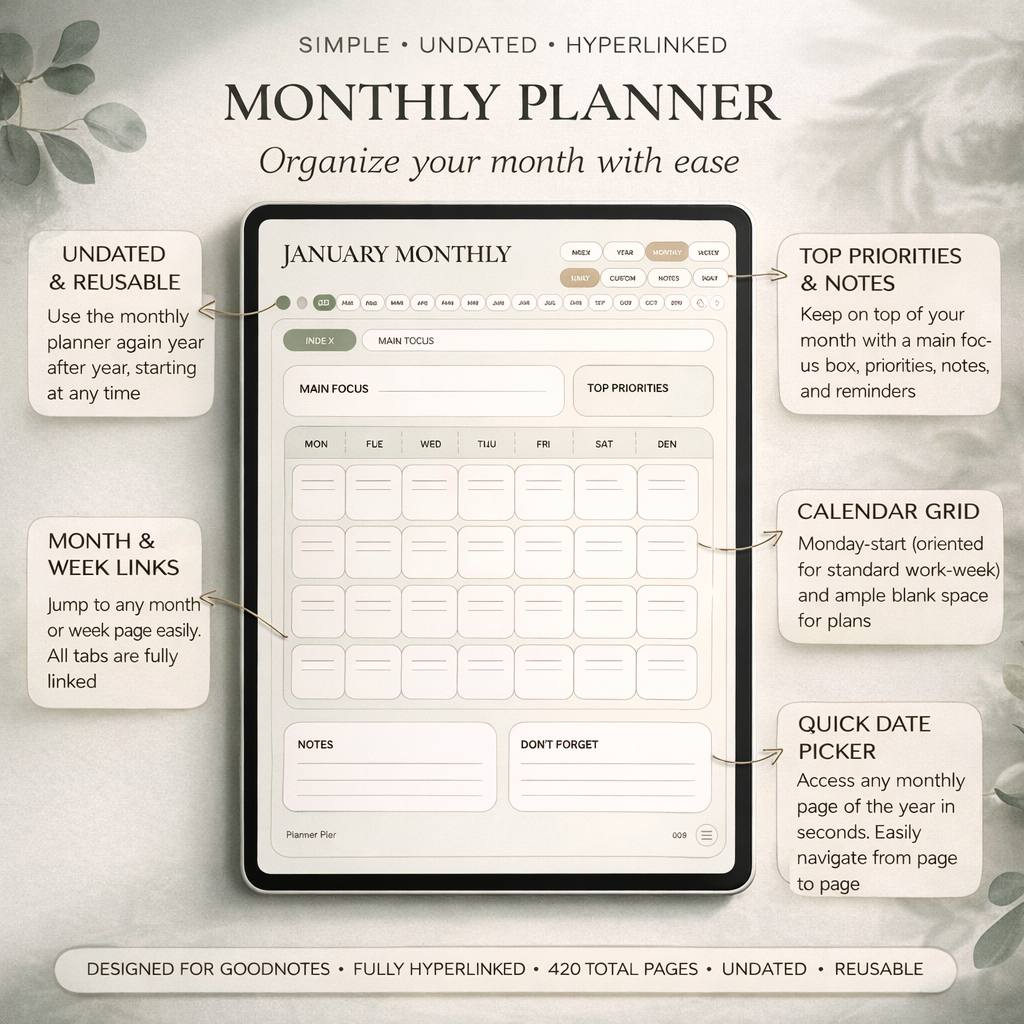
Monthly pages help you see the shape of time. They are useful for deadlines, school events, launches, trips, recurring bills, and wider pacing decisions. The mistake is asking monthly pages to do too much detail. Their job is visibility, not micromanagement. If a planner does not help you see what is coming, the week will always feel more reactive than it needs to.
This is also why digital monthly pages often outperform paper for busy people. Linked navigation makes it easier to jump in and out, and you can keep the month connected to weekly and daily planning without flipping physically through a thick binder.
3. A weekly spread that translates plans into reality
For many people, the weekly spread is the most important page in the whole planner. It is where intention meets time. The page should give you enough room to hold appointments, priorities, and supporting tasks without becoming cramped or visually loud. If the weekly spread feels confusing, the planner will quickly become something you admire more than you use.
A good weekly spread also supports tradeoffs. Busy weeks are not solved by listing everything. They are solved by seeing what actually fits. That is why clear spacing, obvious categories, and usable notes areas matter more than decorative detail.
4. A daily page for high-pressure days
Not everyone needs a daily page every day, but busy people benefit from having one available when the week becomes more demanding. A daily page works best as a pressure-release tool. It helps you time block, isolate top priorities, capture notes, and protect your attention when one day needs more structure than the weekly spread can hold.
The key is optionality. A strong planner includes daily pages without making you feel that you failed if you did not use one on Tuesday. That flexibility is especially important for people whose workload changes through the week.
5. A notes or inbox page for loose thinking
Ideas do not arrive politely. Neither do errands, reminders, or random follow-ups. A notes page or inbox page gives that messy material a home so it does not leak across your whole planner. This page is less glamorous than a tracker or a cover, but it is often the page that protects the rest of the system from clutter.
Busy users especially need this because their weeks generate more open loops. One central capture page reduces the need to remember everything mentally until you have time to organize it.
6. A tracker page that supports one real pattern
Trackers are only useful when they support a meaningful pattern. A habit tracker, sleep tracker, wellness tracker, or spending tracker can be powerful when it answers a real question: why am I losing momentum, where is my energy going, or what is making the month harder than it should be? Generic tracker pages become decorative very quickly. Purposeful trackers become decision tools.
That is why PlannerPier's tracker and wellness products work best when they are paired with a planning problem the user already cares about. The point is not to collect data for its own sake. The point is to make the week easier to steer.
7. A review page that keeps the planner honest
Review pages are the quiet engine of any planner habit. Without review, tasks become stale, priorities drift, and the planner stops reflecting reality. A weekly or monthly review page gives you one moment to ask what still matters, what moved forward, what got dropped, and what deserves space next. That is why the best planners do not only help you plan. They help you reset.
This page matters even more for busy adults because the week can change so quickly. A review page shortens the time between losing the thread and getting it back. In practical terms, that is one of the biggest benefits a planner can offer.
What this means when choosing a planner from PlannerPier
If you are shopping for a digital planner, look for these page types before you look at covers or aesthetic extras. The PlannerPier Simple Undated Digital Planner is a strong fit if you want the core pages in a calm, reusable structure. The PlannerPier ADHD Digital Planner 2026 is useful when you want more supportive prompts and lower-overwhelm structure. The Ultimate Planner Bundle makes sense if you want the broader PlannerPier system with tools and extras included.
The right planner should save time, lower mental clutter, and make it easier to choose what matters next. That is what good page design does. It guides the week without making you wrestle the system. If you want a digital planner that feels built for real life, start with the pages that do the real work.
Frequently asked questions
What pages should a digital planner include?
The most useful planners usually include a dashboard, monthly page, weekly spread, optional daily pages, a notes or inbox page, a tracker, and a review page.
Do I need daily pages in a digital planner?
Not necessarily every day, but having daily pages available is helpful on high-pressure days when the weekly spread is not enough.
Why are review pages important in a planner?
Review pages help you reset priorities, move unfinished tasks forward, and keep the planner aligned with reality instead of letting it go stale.
Which PlannerPier planner includes the most essential page types?
The Simple Undated Digital Planner is a strong all-around choice because it includes linked monthly, weekly, daily, custom, and notes pages in one calm structure.
Choose page types that reduce friction, not just add variety
PlannerPier digital planners are built to help busy people save time, stay organized, and follow through more easily. Explore https://www.plannerpier.com/ to find the planner or bundle that matches the way your weeks really work.