Digital Planner for Moms and Household Routines on iPad: A Simpler Way to Hold Family Life Together
See how to use a digital planner for family schedules, school reminders, meal planning, errands, and household admin without carrying three different notebooks.

Photo by Jakub Zerdzicki on Pexels.
A family planner works best when it reduces the number of places you have to remember things, not when it asks you to maintain a perfect aesthetic system.
Why household planning breaks when information lives everywhere
Many parents are not disorganized because they lack motivation. They are overwhelmed because family logistics scatter across too many surfaces at once. A school reminder lives in email. a grocery idea goes into notes. a doctor appointment sits in the calendar. bills are tracked in another app. meal planning may live on paper if it happens at all. When that happens, every planning session starts with reconstruction. Before you can decide what this week needs, you first have to figure out what already exists.
A digital planner solves that fragmentation well because it can act like a single home base. It will not replace every tool. shared calendars still matter, and reminders still help. But it gives you one visual place to review the week as a whole. That is the missing layer for many families. Instead of seeing appointments in one app and tasks in another, you can map what the week actually feels like: pickups, meals, bills, activities, errands, home admin, and the few priorities that cannot be forgotten.
What pages a family planner really needs
The strongest family planner is not the one with the most inserts. It is the one that makes recurring household decisions easier. A monthly page helps you see birthdays, school events, trips, recurring bills, and important appointments. A weekly spread helps you arrange actual movement: who needs to be where, what must get done, and what can wait. A notes page or inbox page catches the loose items that always appear in family life, from a permission slip reminder to a pharmacy pickup.
Support pages only matter if they reduce friction. Meal planning pages are useful when they make grocery trips easier. budget pages are useful when they reduce bill stress. wellness and sleep pages are useful when they help you notice patterns instead of simply asking for more effort. That is why household planning should stay selective. Your planner should support the life you already have, not pressure you into maintaining a mini command center for every category every single day.
- arrow_right_altUse monthly pages for visibility across school, appointments, birthdays, and bills.
- arrow_right_altUse weekly pages for execution, tradeoffs, and family logistics.
- arrow_right_altKeep one running notes page for errands, reminders, and loose household admin.
- arrow_right_altAdd support pages only when they save time in real life.
Product spotlight
A calmer planner for busy homes
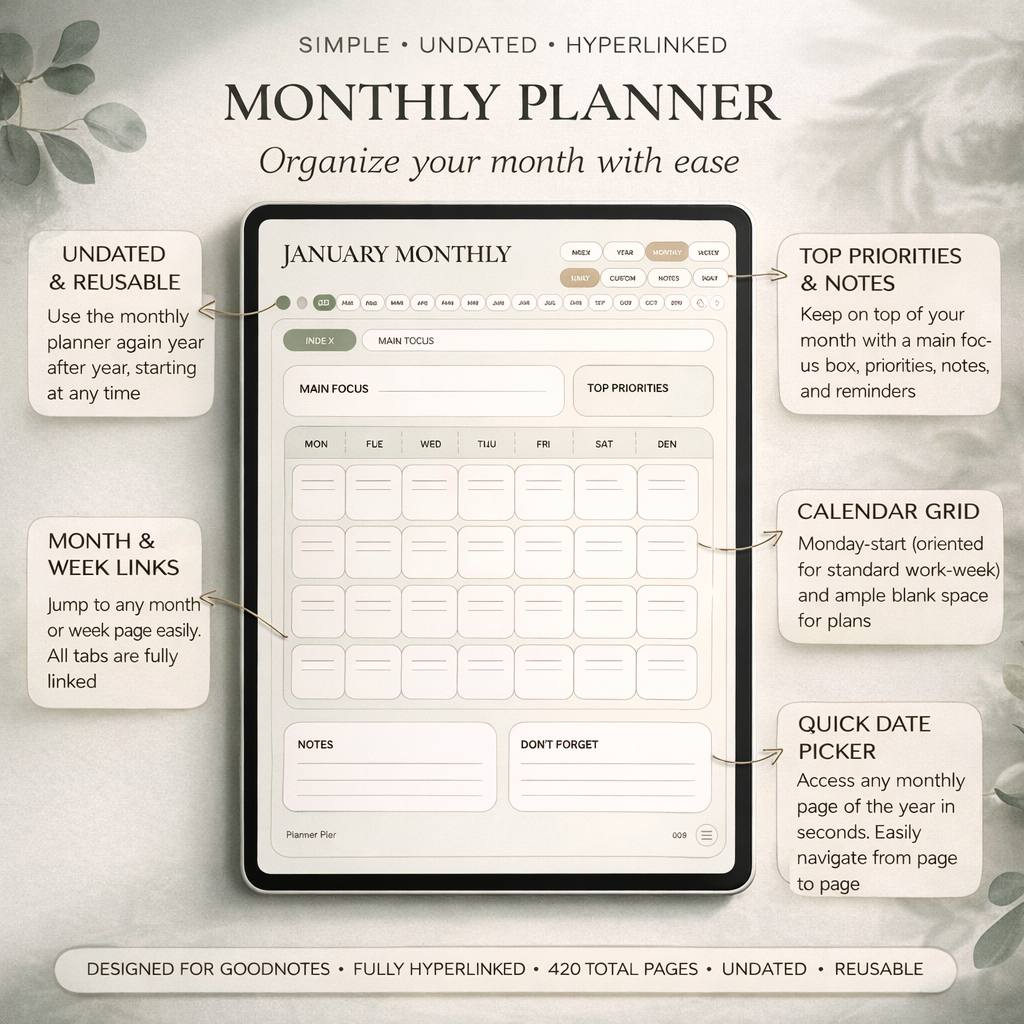
PlannerPier's Simple Undated Digital Planner gives families a clear monthly view, usable weekly pages, daily support when needed, and enough notes space to catch all the loose life admin that usually slips through.
- check_circleUndated structure for routines that change often
- check_circleHyperlinked monthly, weekly, daily, custom, and notes pages
- check_circleLow-clutter layout that feels practical on real family weeks
A weekly family planning routine that actually feels manageable
Choose one weekly reset window, ideally before the week starts or on the first quiet evening available. Open your planner and review the next seven days in this order: fixed appointments, school items, home admin, meals, errands, and your own top priorities. Put the non-negotiables down first. Then ask one practical question: what would make this week feel less rushed? Sometimes the answer is meal prep. Sometimes it is calling the doctor early. Sometimes it is moving two unnecessary tasks off the page so the week can breathe.
This is the point where digital planning becomes more than pretty pages. You are not filling a planner for decoration. You are using it to lower household friction. That is why a simple weekly spread tends to outperform highly themed family planners. When your attention is already stretched, the page should make the next decision obvious. It should not make you decode icons, crowded boxes, or overly cute sections that look nice in a listing image but feel tiring by Wednesday afternoon.
Where PlannerPier products fit into family life
For busy homes, the PlannerPier Simple Undated Digital Planner is one of the clearest fits because family schedules rarely behave like perfect dated systems. The planner gives you linked monthly, weekly, daily, custom, and notes pages in a calm layout that does not crowd your attention. That makes it easy to reopen after a hard week and start again without feeling that the system has already fallen apart.
If household stress is tied closely to routines, emotional load, or the need to rebuild momentum after a messy month, the PlannerPier 30 Day Glow Up Reset Planner can also be a strong companion. It is not a family planner in the traditional sense, but it supports the part many household systems ignore: the adult holding everything together. Better planning is often not only about logistics. It is also about energy, capacity, and having a structure that feels sustainable enough to keep.
How to keep your planner useful instead of turning it into another chore
Start smaller than you think. One monthly page, one weekly spread, and one notes page are enough to improve most family routines. Resist the urge to build twelve trackers on day one. If budgeting is your biggest stress point, add one money page. If meal planning saves your week, add one meal planning spread. Let the planner earn complexity over time. This approach matters because the fastest way to abandon a family planner is to make maintaining it harder than the problems it was supposed to solve.
A digital planner should give you relief, not guilt. It should shorten your weekly reset, help you remember what matters, and create enough clarity that you stop mentally carrying the whole house at once. That is what makes the best family planning systems feel powerful. They do not force perfect control. They give you just enough structure to feel grounded again. If you want a calmer way to manage family schedules and household routines, PlannerPier gives you layouts that are practical, gentle, and ready to use on a real week, not just in an ideal one.
Frequently asked questions
Is a digital planner good for moms and family schedules?
Yes. A digital planner is especially useful when you want one place to review school reminders, appointments, errands, meals, and household admin together.
What pages should a family digital planner include?
A strong family planner usually needs a monthly overview, a weekly spread, a notes page for household admin, and only a few support pages such as meal planning or budgeting when they solve a real problem.
Should I use a dated or undated planner for family life?
An undated planner is often easier for family routines because missed weeks, travel, illness, and school changes do not leave you feeling behind on a fixed timeline.
Which PlannerPier product fits this best?
The Simple Undated Digital Planner is usually the best fit for family planning because it is flexible, linked, and calm enough to revisit even after a chaotic week.
Bring school dates, errands, meals, and priorities into one calmer system
PlannerPier digital planners are built to save time, reduce mental clutter, and make weekly family planning easier to reopen. Visit https://www.plannerpier.com/ to find a planner that fits your household rhythm.