30 Day Reset With a Digital Planner on iPad: Rebuild Routines Without Burnout
Use a digital planner to run a realistic 30 day reset focused on habits, energy, routines, and weekly reflection without turning the month into a punishment project.
The best 30 day reset is not the one with the hardest challenge. It is the one that helps you feel steadier, clearer, and more capable by the end of the month.
Why 30 day resets work better than dramatic life overhauls
Many people turn to reset content because their current routine no longer feels supportive. Energy is low, habits feel scattered, and the week is carrying too much drag. The problem is that a lot of reset advice responds by making the plan even heavier. It adds a harder wake-up time, stricter rules, more tracking, and a long list of identity goals all at once. That kind of challenge may look motivating online, but it often collapses in real life because it asks for your most disciplined self at the exact moment you feel least steady.
A 30 day reset works better when it lowers the threshold for re-entry. One month is long enough to build evidence, but short enough to stay emotionally believable. You can use the month to restore a few key foundations: sleep, movement, hydration, morning start-up, evening shutdown, planning habits, and one or two meaningful personal goals. That is why reset planners perform so well in search and conversion. They promise improvement, but they also promise a defined container for that improvement, which feels far less overwhelming than a vague permanent transformation.
What a realistic digital reset plan should include
A strong reset planner needs three layers. First, it needs a before page or starting snapshot so you can see what feels off and what you want more of. Second, it needs daily pages that are structured enough to support focus but not so crowded that you avoid them after a hard day. Third, it needs weekly reset moments where you can review what is helping, what is not, and what needs simplifying.
This is also where digital planning has a clear advantage over paper. You can move through linked daily pages quickly, keep the month contained inside one iPad workflow, and duplicate supportive pages if you need extra notes or reflection space. More importantly, you can restart cleanly. If day seven goes badly, you do not need a perfect streak to keep going. You just open the next page and continue. That restart-friendly feeling is one of the strongest benefits of a well-designed digital reset system.
- arrow_right_altStart with a simple baseline of how life feels now.
- arrow_right_altChoose only a few habits or routines to strengthen during the month.
- arrow_right_altUse weekly reviews to simplify, not to punish yourself.
- arrow_right_altMeasure progress by consistency and clarity, not by perfection.
Product spotlight
A reset planner that supports consistency, not pressure
PlannerPier's 30 Day Glow Up Reset Planner gives you a full one-month structure with daily pages, habit tracking, weekly resets, and reflections so you can rebuild routines without turning self-improvement into another source of burnout.
- check_circle30 linked daily pages plus weekly reset and reflection support
- check_circleHabit tracker, reset page, notes, and multiple colorways included
- check_circleDesigned for realistic momentum instead of extreme challenge culture
How to use daily pages without turning the reset into a chore
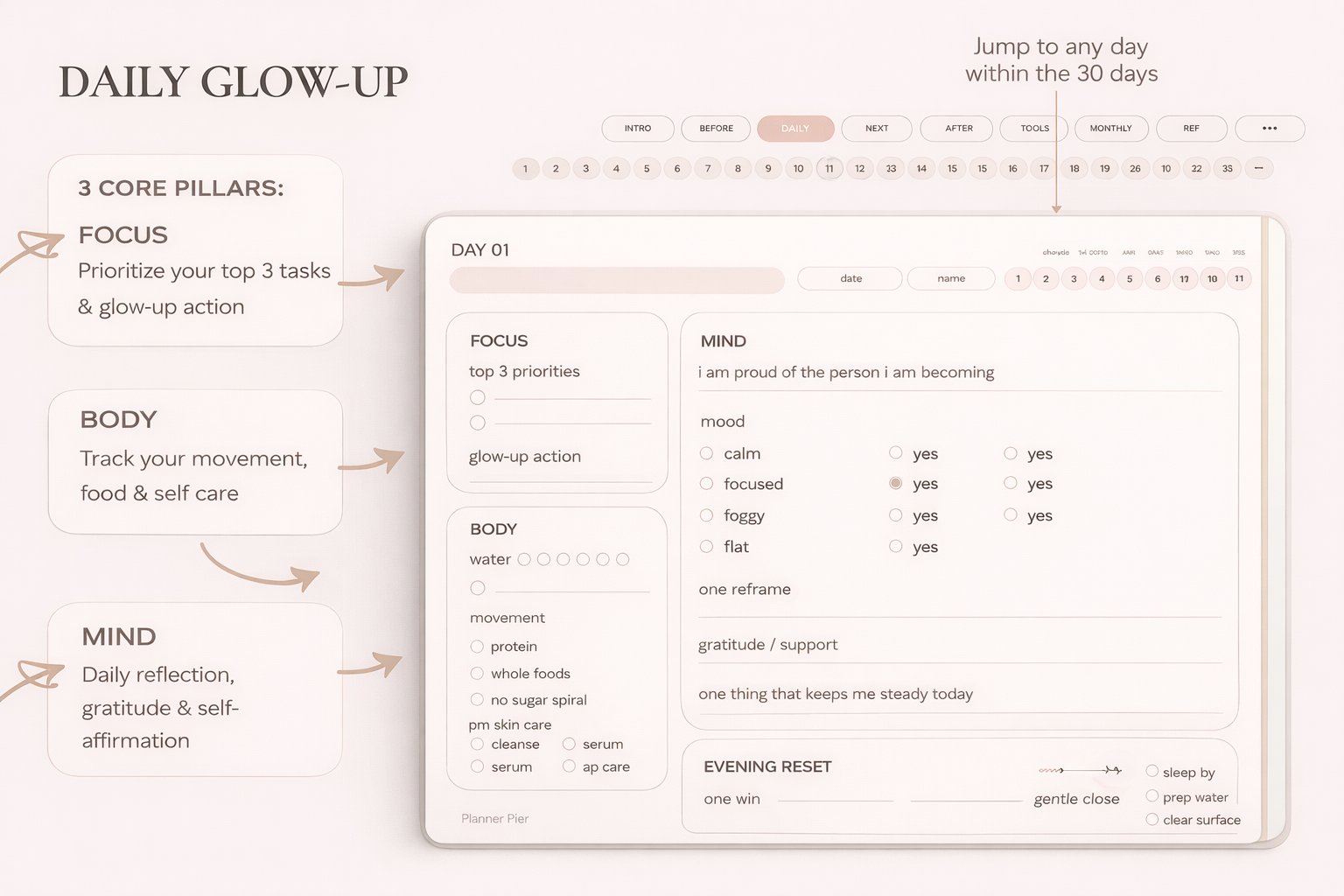
Daily reset pages should help you orient yourself fast. A useful page might include focus for the day, body support, mindset, habits, notes, and one small win. That is very different from building a daily page that asks you to monitor twenty metrics and rate your performance in six categories before breakfast. When reset planning becomes too demanding, it stops acting like support and starts acting like surveillance.
The PlannerPier 30 Day Glow Up Reset Planner gets this balance right because it is structured around before and after reflection, 30 linked daily pages, habit tracking, weekly reset pages, a reset page, and notes support. It gives enough guidance to create rhythm without forcing every day to look equally ambitious. If your goal is to feel more consistent, more regulated, and less overwhelmed, that gentler design approach matters a lot.
What to review each week of the reset
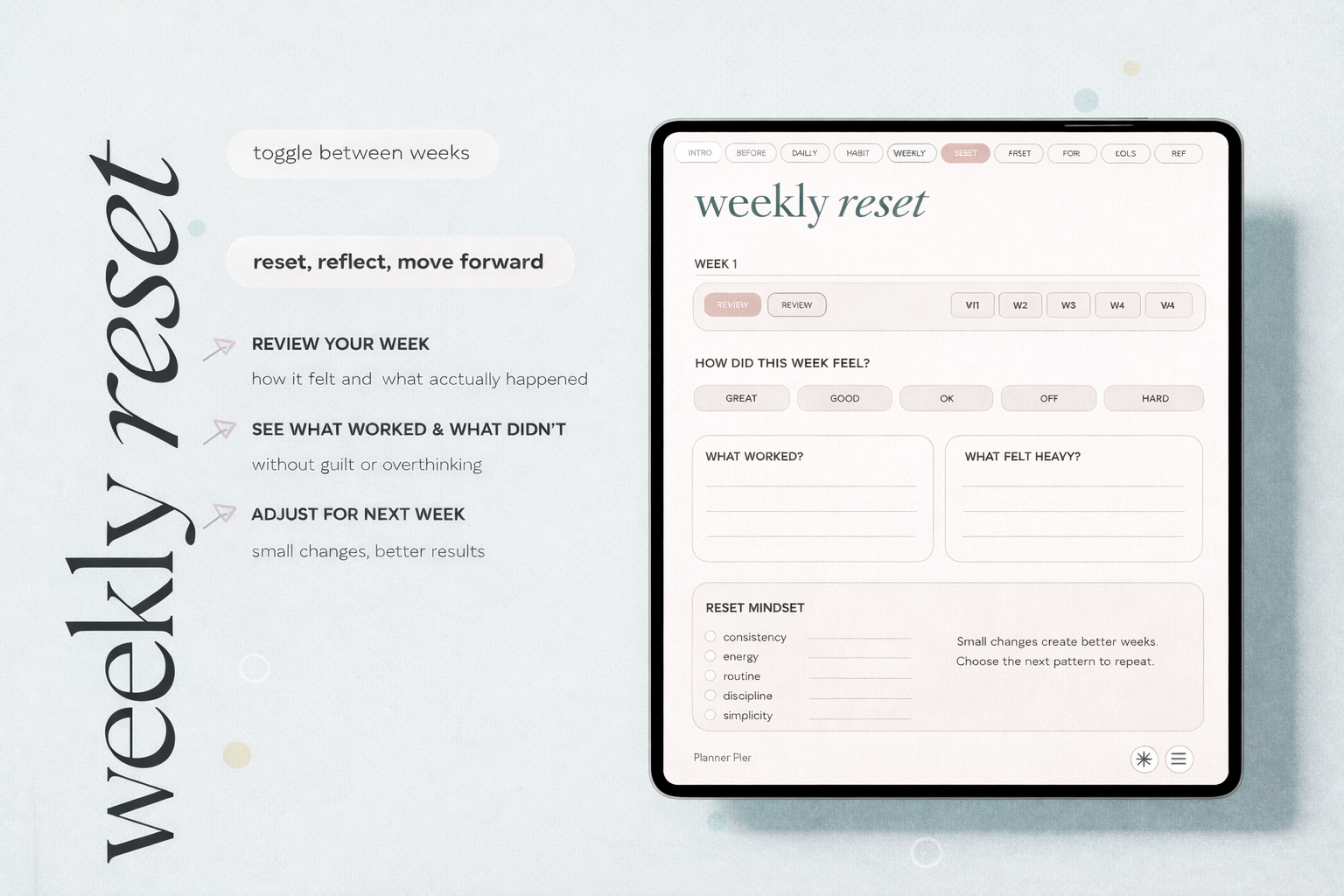
Weekly resets are what keep a 30 day challenge from becoming random. At the end of each week, review three things: what supported your energy, what created friction, and what one adjustment would make next week easier. This process matters because most routine failures are not moral failures. They are design failures. The plan demanded too much, the cue was unclear, the environment fought you, or the target was too vague.
By reviewing weekly, you turn the reset into a responsive system rather than a rigid test. Maybe you learn that your morning routine is too long. Maybe your planner works better at night. Maybe walking is a better anchor habit than a full workout. Maybe one top priority per day is more sustainable than three. Those lessons are the real value of a reset month. They help you build a routine you can actually keep after the challenge ends.
How to know if your reset is working
A successful reset does not always look dramatic from the outside. Often it looks quieter. You start the day faster. You miss fewer basics. You know what matters this week. You feel less mentally cluttered. You recover from off days with less shame. Those are strong outcomes even if the month was not visually perfect. In fact, those are usually the outcomes most likely to survive into real long-term change.
This is why the best reset products are benefit-led rather than fantasy-led. They help you feel better organized, more present, and more able to follow through. If you want a planner that supports that process gently, PlannerPier is a strong place to start. The goal is not to become a different person in 30 days. The goal is to create a month that makes your next month easier too.
Frequently asked questions
What is a 30 day reset planner used for?
A 30 day reset planner helps you rebuild routines, track habits, reflect weekly, and create a short-term structure for feeling more organized and steady.
Can I do a 30 day reset in Goodnotes?
Yes. A linked PDF planner works very well in Goodnotes because daily pages, habit tracking, and weekly reviews are easy to navigate on iPad.
How many habits should I track in a reset month?
Usually only a few. The strongest reset plans focus on a small number of repeatable actions instead of trying to transform every area of life at once.
Which PlannerPier product fits this best?
The 30 Day Glow Up Reset Planner is built for exactly this use case, with linked daily pages, habit tracking, weekly resets, and before and after reflection.
Use one month to rebuild calm structure and visible momentum
If you want a softer way to reset your routines, PlannerPier gives you digital planners that save time, support follow-through, and make it easier to start again. Explore https://www.plannerpier.com/ to find the reset-friendly planner that fits your season.