Dated vs Undated Digital Planner for Goodnotes: Which One Will You Actually Stick With?
Compare dated vs undated digital planners for Goodnotes, including setup effort, flexibility, restartability, long-term planning, and buyer fit.
Photo by Mikhail Nilov on Pexels.
The best planner format is not about which one looks more complete at checkout. It is about which one makes it easier for you to begin, pause, restart, and keep planning in real life.
Still unsure which format fits?
Use the PlannerPier quiz before you buy blind
The PlannerPier quiz can help you narrow whether you need more structure, more flexibility, or a calmer beginner setup.
Try the planner quizWhy this choice matters more than buyers expect
One of the most common digital planner buying questions is also one of the least explained: should I buy a dated planner or an undated planner? Most sellers answer this with one sentence about flexibility, then move on. But the choice affects how a planner feels from the very first week. It changes onboarding effort, emotional pressure, and whether the buyer feels invited back after missing a few days. In other words, this is not a minor formatting preference. It is a behavior design decision.
The reason this topic performs well in search is simple. Buyers are trying to avoid regret. They do not want to spend money on a planner that feels wrong after a few days. A dated planner can feel energizing because it is ready to use immediately. It can also feel intimidating if the buyer starts late or falls behind. An undated planner can feel freer and more forgiving. It can also feel slightly more open-ended if the user wants firmer external structure. The right answer depends less on productivity theory and more on how the user actually lives.
What a dated digital planner is best at
A dated planner is strongest when the buyer wants momentum through structure. The pages are already anchored to a calendar year, which means the setup barrier is low. Open the planner, go to the current month, and begin. This simplicity is valuable for users who already know they want a year-based planning system and do not want to spend extra time labeling months or adapting page sequences. It also works well for people who like the feeling of a fixed timeline because it creates clearer weekly and monthly commitment.
Dated planners are often a great fit for users with stable recurring rhythms, strong seasonal goals, or a desire to make the planner part of a full-year reset. They can also support long-range thinking more naturally because the year view is already laid out. The drawback is emotional, not technical. If the user stops for a few weeks, a dated planner can start to feel like evidence of failure. For some people that is motivating. For others it is enough to make them avoid opening the file.
- arrow_right_altBest for users who want fast setup and immediate calendar structure.
- arrow_right_altHelpful for annual planning, recurring routines, and strong month-to-month visibility.
- arrow_right_altOften easier for beginners who want fewer decisions at the start.
Product spotlight
A low-pressure planner for flexible routines
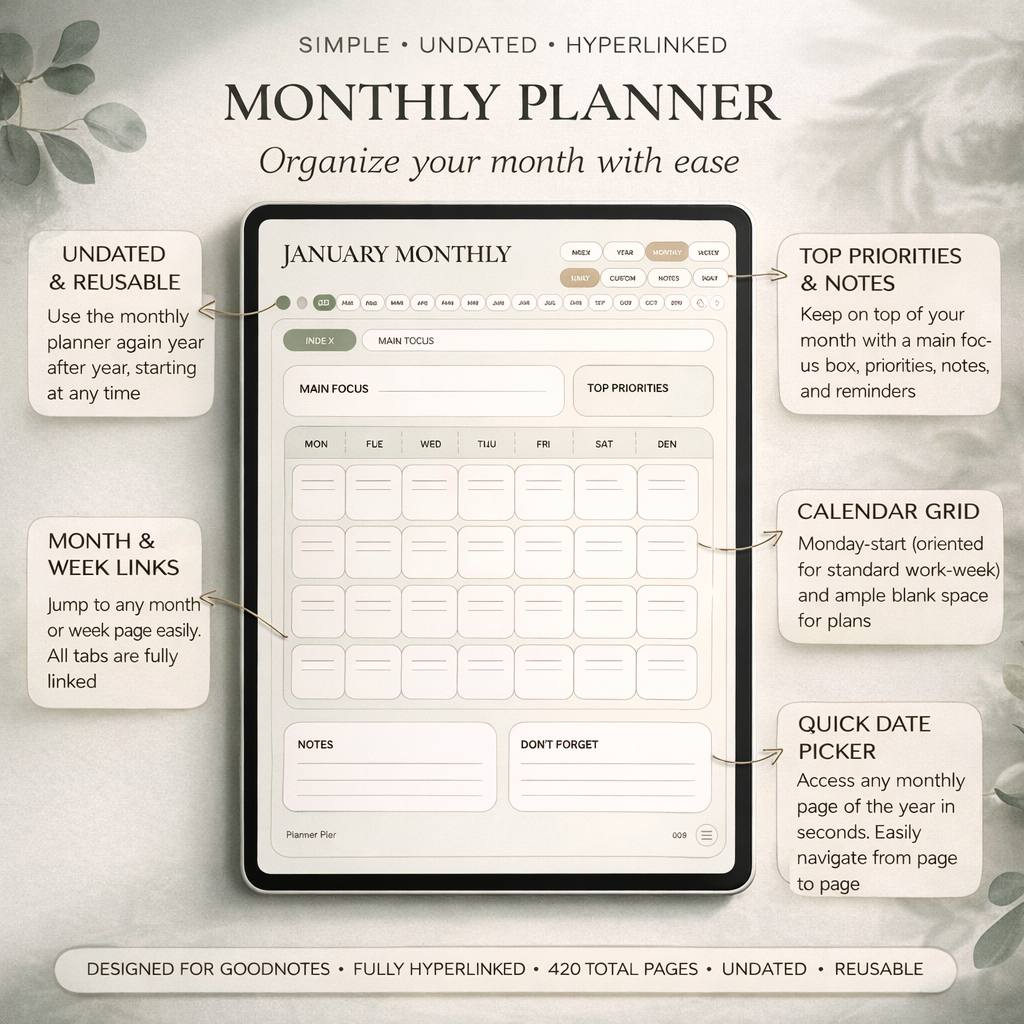
PlannerPier's Simple Undated Digital Planner is ideal for users who want a linked Goodnotes system that feels structured without forcing a fixed calendar start.
- check_circleUseful for midyear starts and restart-friendly weekly planning
- check_circleIncludes monthly, weekly, daily, custom, and notes sections
- check_circleHelps reduce the guilt that often comes with rigid dated systems
What an undated digital planner is best at
An undated planner is strongest when the buyer wants flexibility without losing the benefits of structured pages. It lets the user begin at any time, pause without guilt, and adapt the planner around real life instead of a perfect annual arc. This is especially helpful for people who discover digital planning midyear, plan in bursts, change routines often, or simply do not want to feel locked into a preset calendar from the beginning.
Undated planners are also powerful for people who are learning what kind of planning they actually need. Because the start date is open, the file feels more experimental and less high-stakes. That can increase follow-through for users who normally quit planners when they miss a stretch of days. The tradeoff is that some users need stronger external structure than an undated system naturally provides. If the buyer wants the planner to push them into routine rather than gently support one, a dated file may feel easier to commit to.
The hidden question is not date format, it is restartability
Most people think they are deciding between convenience and flexibility. In practice, they are deciding how much restart friction they can tolerate. Restartability is one of the most underrated features in digital planning. Life interrupts routines. Travel happens. Work gets chaotic. Energy drops. A planner only becomes valuable long term if the user can come back without feeling they must repair the whole system before using it again.
This is why PlannerPier should talk more openly about recovery and resumption. Competitors often sell the start of planning: new year, fresh goals, beautiful dashboards. Fewer of them sell the middle, where real consistency is won or lost. An undated planner often excels here because it stays emotionally open. A dated planner can still work beautifully if the layout is forgiving and the brand teaches users how to move forward without guilt. Either way, the brand that addresses this honestly will feel more trustworthy.
How buyers choose the wrong format
A common mistake is buying a dated planner because it looks more complete, even when the user historically abandons calendar systems whenever routines get disrupted. Another common mistake is buying undated because it sounds safer, even when the user actually wants firmer boundaries and less manual setup. In both cases, the product itself may be good. The mismatch happens because the buyer chose based on aesthetics or abstract preference instead of behavior.
A better buying question is this: do you need momentum or do you need permission to restart? If you need momentum, dated is often right. If you need permission to restart, undated is often better. Then add the second question: does your life run on a fixed yearly rhythm, or does it change too often for that to feel helpful? These questions produce better decisions than comparing page counts or matching cover styles alone.
Which PlannerPier products fit each side best
For buyers who want flexibility, the Simple Undated Digital Planner is the clearest PlannerPier fit. It is calm, linked, and structured enough to be useful immediately, but open enough to let the user start whenever they are ready. That makes it especially appealing for beginners, inconsistent planners, and anyone trying to rebuild a routine without heavy pressure.
For buyers who want a fuller annual rhythm, the 2026 Kawaii Cat Digital Planner offers a more date-anchored experience with a stronger sense of year-specific commitment. PlannerPier can also use free products like the 2026 Free Modern Planner as a lower-risk trial point for users who want to experience a dated setup before choosing a premium product.
How this article helps PlannerPier sell more intelligently
This topic is valuable because it attracts buyers who are close to purchase but still uncertain about fit. That means the article can serve as both SEO content and a conversion filter. Instead of forcing everyone toward one product, it guides the reader into the format most likely to stick. This reduces buyer hesitation and makes product recommendations feel more helpful than pushy.
It also positions PlannerPier as a brand that understands planning behavior, not just planner design. That distinction matters. The more crowded the digital planner market becomes, the more trust comes from thoughtful guidance. When buyers feel understood, they are more likely to purchase now and return later for tools, stickers, or a second planner that fits a new stage of life.
A simple decision framework before you buy
Choose a dated planner if you want a ready-made year, dislike setup, and feel motivated by a fixed timeline. Choose an undated planner if you value flexibility, start planners outside January, or need a system that welcomes missed weeks without emotional friction. If you are still unsure, start with the lighter option that makes action easier today. In many cases, that means beginning with an undated planner and upgrading later once your rhythm is clearer.
The key insight is that there is no universally better format. There is only better fit. When a planner matches your actual behavior, consistency feels lighter. When it fights your behavior, even a beautiful file becomes hard to trust. That is the idea PlannerPier should keep reinforcing: the right planner format reduces decision fatigue before the week begins.
Frequently asked questions
Is a dated or undated digital planner better for beginners?
Beginners who want less setup often prefer dated planners, but beginners who feel pressure easily often stick better with undated planners because they are easier to restart.
Who should buy an undated digital planner?
Undated planners are usually best for people who start midyear, pause often, or want more flexibility without wasting pages.
Can a dated planner still work if I miss weeks?
Yes, but it works best when you treat missed time as a reset point instead of trying to catch up on every unused page.
Choose the planner format that matches your behavior, not just your wishlist
PlannerPier helps you choose between flexible undated systems and stronger annual structures so your planning routine actually lasts. Explore the collection at https://www.plannerpier.com/.