Digital Planner Bundle vs Single Planner: What Should You Buy First?
Compare digital planner bundles and single planners for Goodnotes and iPad workflows, including cost, overwhelm risk, layout fit, and how to choose the right first purchase.
A bigger bundle is not automatically a better planner purchase. The right first buy is the one that gives you enough structure to keep planning next week without flooding you with options you will never open.
Not sure which level fits you?
Use the planner quiz before you spend on the wrong format
PlannerPier's Find Your Planner tool helps you narrow your layout and workflow fit before choosing between a simple planner and a bundle.
Open Find Your PlannerWhy shoppers get stuck between a bundle and one planner
This search usually happens right before purchase. The buyer has decided they want to try digital planning, but they still do not know whether more files will make planning easier or just create more setup pressure. Marketplace listings often make bundles look like the obvious win because they promise more pages, more covers, more stickers, and more value for the same money.
The problem is that value and usability are not the same thing. A bundle can be excellent when the products fit together and the buyer already understands their routine. It can also become a folder full of almost-right PDFs that force the user to make too many decisions before a single week is planned. That is why this topic matters. People are not only comparing file counts. They are trying to avoid buying the wrong level of complexity.
When a single planner is the smarter first purchase
A single planner is usually the safer first step when your main goal is to build one reliable planning habit. You choose one structure, learn one navigation system, and give yourself enough time to find out whether the weekly spread, daily layout, and note space actually support your life. This is especially important for beginners using Goodnotes for the first time, because the app itself is already one learning curve.
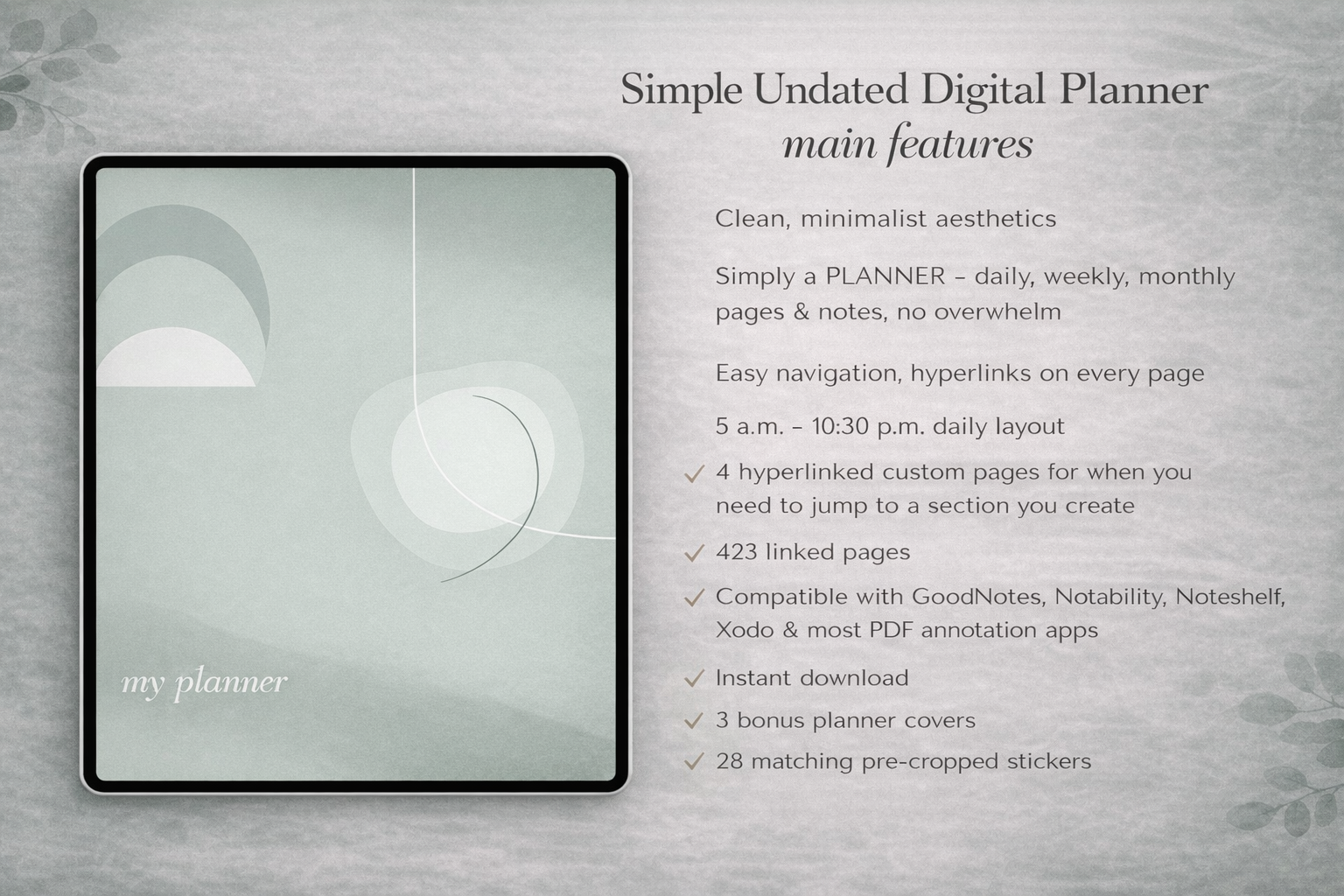
A cleaner file also makes it easier to notice what is missing. Maybe you realize you need more project space, more habit tracking, or a calmer daily page. That kind of feedback is useful only when the starting system is simple enough to read clearly. Products like the Simple Undated Digital Planner for iPad work well here because they give structure without asking the buyer to manage a mini library on day one.
- arrow_right_altBuy one planner first if you are new to digital planning and still testing your weekly rhythm.
- arrow_right_altBuy one planner first if your main pain point is consistency, not lack of planner accessories.
- arrow_right_altBuy one planner first if decision fatigue is already part of why planning feels hard.
When a bundle actually makes more sense
A bundle starts making more sense when your needs are already visible. Maybe you know you plan better with a weekly spread, want matching stickers, and also need a simple system that stays usable across personal, work, and wellness planning. In that case, buying coordinated pieces together can save both money and friction.
That is where a bundle should behave like a system, not like a pile of extras. The Ultimate Planner Bundle is positioned well when the promise is clear: one planner, one sticker pack, and browser-based PlannerPier access in a starter package. That is very different from a bloated bundle that makes the user assemble their own workflow from twenty disconnected files.
The real risk: buying abundance instead of fit
Competitor research shows the same sales pattern again and again: shops lead with quantity. They highlight 100 templates, huge sticker packs, dozens of inserts, and every imaginable lifestyle category. That works because shoppers want reassurance that they are getting enough. But for many users, especially beginners, the real need is not more volume. It is a calmer starting point.
This is one of the strongest strategic openings for PlannerPier. The brand does not need to out-shout every bundle seller with bigger counts. It can win by explaining fit more clearly. If the blog teaches readers to choose based on weekly use, cognitive load, and habit maintenance, the product recommendation feels more trustworthy. A buyer who feels understood is much more likely to convert than one who feels dazzled.
How to decide in five honest questions
Ask yourself five blunt questions before you buy. Do I already know what kind of weekly layout I like? Do I tend to use stickers and extras or avoid them? Am I trying to solve a specific planning problem or just buy something more inspiring? Will more options motivate me or slow me down? Do I want one planner file, or am I ready for a broader planning system?
If your answers are uncertain, choose the simpler route. If your answers are clear and you already know you want a coordinated starter system, the bundle becomes more defensible. The important thing is to treat the purchase like workflow design, not entertainment shopping. The best planner is not the one with the longest listing. It is the one that makes next Monday easier to start.
How PlannerPier should position the conversion
This keyword is high intent because the reader is close to buying. The article should therefore avoid hard selling and instead remove decision friction. A helpful structure is: explain the tradeoff, give the reader a decision framework, then show the most natural product fit. For someone who needs simplicity, that may be the Simple Undated Digital Planner for iPad. For someone who wants a broader starter system, it may be the Ultimate Planner Bundle.
PlannerPier's tool platform adds another advantage here. A shopper can test layout preferences and planning needs before buying blind. That means the content does not have to push urgency. It can guide the user into a lower-risk decision and let the product ecosystem do the rest. That is a stronger long-term conversion play than simply saying a bigger bundle is always better.
Frequently asked questions
Is a digital planner bundle worth it for beginners?
Sometimes, but not always. Beginners usually do better with a simpler planner first unless they already know they want a coordinated system with extra assets.
Should I buy one planner or multiple planner files?
If you are still learning your routine, start with one planner. Add more files only after you know what structure you actually use.
What makes a good planner bundle?
A good bundle feels like one usable system with coordinated pages and clear value, not just a large collection of disconnected extras.
Choose the digital planner purchase that lowers friction, not raises it
Explore PlannerPier's digital planner options at https://www.plannerpier.com/ and choose either a simple first planner or a starter bundle that matches your real routine.