How to Use a Habit Tracker in Goodnotes Without Turning Your Digital Planner Into Homework
Learn how to use a habit tracker in Goodnotes with a digital planner, including streak-friendly design, weekly reviews, goal alignment, and realistic tracking habits.

Photo by cottonbro studio on Pexels.
A habit tracker should make your routine easier to notice, not harder to maintain. The best trackers help you see patterns, restart quickly, and keep the planner supportive instead of judgmental.
Need a cleaner daily structure?
Build a habit-friendly daily page with PlannerPier
The Daily Page Maker can help you create a simpler page around priorities, notes, and the few habits that actually matter this week.
Open Daily Page MakerWhy habit tracking often fails inside otherwise good planners
Habit tracking is one of the most searched digital planner features because it promises visible progress. But it is also one of the easiest features to misuse. Many people fill in a beautiful tracker for a few days, miss a stretch, and then stop opening the planner entirely. The issue is usually not laziness. It is design. The tracker asked for too much, judged too harshly, or became disconnected from the routines and goals that actually matter.
That is why a good habit tracker should not be evaluated only by how neat it looks. It should be judged by whether it helps the user notice patterns, restart quickly, and stay honest without shame. In a Goodnotes workflow, this is especially important because digital planners can hold many sections. If the tracker becomes just another page to maintain, it starts competing with the rest of the planner instead of supporting it. The result feels like homework, not help.
What a useful digital habit tracker actually does
A useful tracker reduces ambiguity. It gives a home to the few behaviors that truly influence how your week feels. That might be hydration, movement, sleep, medication, reading, shutdown routines, meal prep, gratitude, or focused work sessions. The key is that the list stays short enough to remain meaningful. Once a tracker tries to hold fifteen new habits at the same time, it usually becomes aspirational clutter rather than usable information.
The second job of a tracker is feedback. After a few days or weeks, the user should be able to look back and see what helped, what slipped, and what conditions made consistency easier. This is where digital planning has an advantage. You can keep habit pages near weekly reviews, daily pages, and notes so the tracking lives inside a bigger planning conversation. The habit is no longer isolated. It becomes part of how the week is understood.
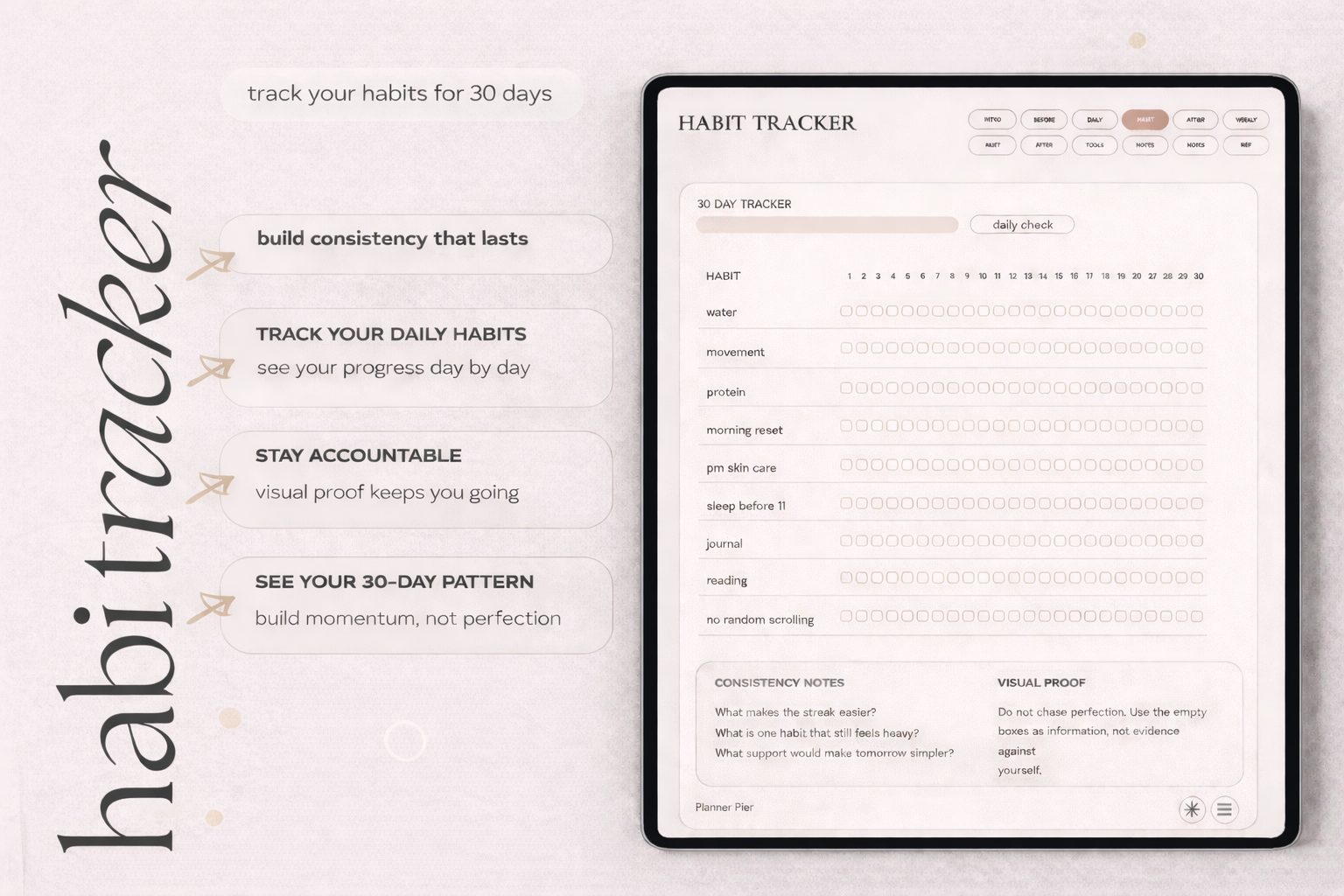
- arrow_right_altTrack only a few behaviors that meaningfully affect your day or week.
- arrow_right_altPlace trackers close to daily or weekly planning pages so they stay visible.
- arrow_right_altReview patterns weekly instead of obsessing over streaks every day.
- arrow_right_altUse trackers to learn what helps, not to create another source of guilt.
Product spotlight
A reset-focused planner for routines that need gentler support
PlannerPier's 30 Day Glow Up Reset Planner combines daily structure, habit tracking, and weekly reset pages so routines feel visible without becoming emotionally heavy.
- check_circleIncludes habit tracker, weekly resets, reflection pages, and notes
- check_circleStrong fit for users who want supportive routine-building structure
- check_circleWorks well for wellness, personal goals, and low-pressure consistency
How to choose habits that belong in your planner
Not every good intention belongs in a tracker. The strongest tracking candidates are behaviors that are small, repeatable, and strongly connected to how your day functions. If missing the habit noticeably changes your energy, focus, mood, or follow-through, it is probably a good candidate. If the behavior is vague, highly irregular, or mostly there because it sounds aspirational, it may not belong on a recurring tracking page yet.
This is where many users go wrong. They track what sounds impressive instead of what creates stability. A better question is not what would look good completed. It is what would make tomorrow easier if repeated. That might be going to bed earlier, preparing lunch, reviewing priorities, taking a short walk, or doing a five-minute reset before starting work. Strong habit tracking is less about identity performance and more about building predictable support around real life.
Why weekly review matters more than daily streak obsession
A daily checkmark can feel satisfying, but habit tracking becomes more useful when it is reviewed in weekly context. Weekly review helps you notice the relationship between habits and outcomes. Did movement help energy? Did a shutdown routine make mornings calmer? Did missing sleep derail focus blocks? A weekly lens turns the tracker from a compliance tool into a learning tool. That is one of the biggest mindset upgrades a planner user can make.
This is also why Goodnotes planners with linked weekly pages can be so effective. If your habit tracker sits near your weekly planning and reflection pages, it becomes easy to compare what you intended with what actually happened. That comparison creates better decisions for the next week. It also softens the emotional impact of missed days because the question changes from why did I fail to what pattern am I noticing.
How PlannerPier products fit habit tracking naturally
The 30 Day Glow Up Reset Planner is a natural fit for this topic because it already frames tracking inside a broader reset and reflection process. That makes it easier to talk about routines, habit support, and restart-friendly planning in a way that feels grounded rather than performative. Its structure supports short-term behavior change without pretending the user needs a complete life overhaul on day one.
The ADHD Digital Planner 2026 also fits because many users struggle with habit tracking precisely when systems become too rigid or demanding. PlannerPier can describe both products through the same value lens: visible routines, lower friction, and gentle restarts. This gives the content a more coherent commercial path than simply recommending any planner with a checkbox page.
How to keep tracking from becoming emotionally heavy
The simplest way to keep tracking light is to design for resumption. Assume you will miss days. Make that normal. If the tracker feels broken after one interruption, the structure is too brittle. Use language that suggests observation instead of judgment. If possible, pair the tracker with a short note field or weekly reflection prompt so you can understand what happened rather than only recording that it did not happen.
It also helps to avoid making every tracked habit public in your own mind. Some habits are functional, not aspirational. Taking medication, charging your tablet, reviewing tomorrow's plan, or preparing a bag for school may not feel glamorous, but they might be more life-changing than grander goals. A supportive planner allows these habits to count. That is one reason soft, useful layout design converts better than overly polished, perfection-oriented habit systems.
What competitors usually miss in habit-tracker content
A lot of competitor habit-tracker content focuses on aesthetics, sticker ideas, or lists of fifty habits to track. That approach gets clicks, but it often misses the behavioral layer. Readers do not only want inspiration. They want a system they can continue using after the novelty wears off. They want to know which habits are worth tracking, how many is too many, and what to do after missing a week. These are the questions that build trust.
PlannerPier should therefore keep its habit-tracker messaging practical. Focus on a few habits, tie them to energy and weekly planning, and teach the user how to review rather than merely decorate. This fits the brand well because it aligns with the broader decision-removal philosophy. The planner exists to make the next helpful action easier to see. A habit tracker should do the same.
A simple habit-tracking framework that actually sticks
Pick three habits for the next two weeks. Place them on one tracker page near your weekly plan. Review them once midweek and once at the end of the week. During the review, ask three questions: what helped, what got in the way, and which one habit would make next week easier if kept? This framework is intentionally small because scale is not the goal. Repeatability is. If the system works, you can expand later. If it does not, you have learned something without turning the planner into a guilt object.
This is where PlannerPier can make a strong, natural CTA. Instead of promising transformation, invite the reader to try a lighter planning system that supports routines without overload. That promise is both useful and commercially credible. People are more willing to buy a planner when the brand appears interested in helping them use it well rather than simply selling them another template pack.
Frequently asked questions
How many habits should I track in a digital planner?
Usually only a few. Three to five meaningful habits often work better than tracking everything at once because the page stays useful instead of overwhelming.
Should habit trackers be reviewed daily or weekly?
Both can help, but weekly review is usually more valuable because it shows patterns and reduces the emotional weight of missed individual days.
What is the best Goodnotes planner for habit tracking?
The best option is one that connects tracking to weekly planning and reflection, such as a reset-focused planner or a layout with gentle, restart-friendly structure.
Track habits in a way that makes the planner easier to reopen
PlannerPier planners help you build routines, review patterns, and restart without shame so your tracking system stays useful over time. Explore more at https://www.plannerpier.com/.